Goose vs Claude Code: The Ultimate Coding Agent Showdown
Block's Goose offers a free, local alternative to Anthropic's costly Claude Code. Discover why developers are making the switch to open-source AI agents.
Aidrift Team
8
0

Expert guides, in-depth reviews, and practical tutorials to help you get the most out of AI tools.
Activate what you learn by exploring the live AI catalog for production-ready apps, comparing MCP servers when you need API-level control, exploring the skills library for reusable agent instructions, and keeping a pulse on breakthroughs via the AI news digest.
Block's Goose offers a free, local alternative to Anthropic's costly Claude Code. Discover why developers are making the switch to open-source AI agents.
Learn to build a robust visual document retrieval pipeline using ColPali and late interaction scoring. Resolve dependencies and optimize AI search results today.
Discover how Gradio's new gr.HTML component allows you to build and integrate web apps instantly. A game-changer for rapid AI prototyping.
Learn how to build a visual document retrieval pipeline using ColPali and late interaction scoring. Discover how to render PDFs as images for better AI accuracy.
Discover Zyphra's ZUNA, a 380M-parameter foundation model for EEG data. Explore how this Apache-2.0 release advances noninvasive BCI and AI.
Railway raised $100M to build AI-native cloud infrastructure. Discover how sub-second deployments and custom hardware challenge AWS and accelerate AI development.
Microsoft's Copilot bug exposed confidential emails, raising critical questions about AI security and data privacy for enterprise users.

Imagine a world where anyone can become a composer without ever picking up an instrument. Where a simple text prompt turns into a full-fledged song complete with vocals, melody, and rhythm in mere seconds. In the era of AI permeating every aspect of life, Suno AI stands out as a game-changer for creators, musicians, and businesses alike. As an IT and AI-focused startup, we see immense potential in tools like this for innovation—from personalized content to automating creative workflows. In this article, we'll dive deep into Suno AI: from a comprehensive overview to practical tips, pros, cons, and real-world examples. Whether you're an AI novice or a seasoned developer, there's value here for everyone.

How IT startups can use this "answer engine" for research, market analysis, and even writing code.

In 2025, the world of software development is undergoing a revolution thanks to AI tools, and one striking example is Kiro IDE from Amazon Web Services (AWS). This is an agentic IDE (Integrated Development Environment) that helps developers transition from prototypes to full production using spec-driven development — an approach focused on specifications. Kiro is built on a fork of Visual Studio Code and integrates powerful AI models, such as Claude from Anthropic, for task automation. In this detailed article, we will break down the history of Kiro's creation, its key features, advantages, pricing grid, comparison with competitors (such as GitHub Copilot, Cursor, and VS Code), a step-by-step guide to usage, real-world examples, and potential challenges. We will also add visual illustrations for better understanding. The data is current as of November 2025.

In the world of artificial intelligence, where competition grows every day, Anthropic stands out with its emphasis on safety and ethics. Founded in 2021, it quickly became one of the leaders in developing large language models (LLM). Its flagship product — Claude AI — has gained popularity due to its reliability, usefulness, and minimal risks. In this extensive article, we will thoroughly examine the history of Anthropic's founding, the process of creating Claude, the creators' motivations, the company's turnover at the end of 2025, as well as the key advantages of this AI. We rely on current data as of November 2025 to provide a complete picture. The article will be illustrated with relevant images for better understanding.

In the modern world, where technologies are developing at a breakneck speed, artificial intelligence (AI) is becoming an integral part of our daily lives. One of the most promising directions in this field is AI agents — autonomous systems capable of performing complex tasks without constant human intervention. In this article, we will thoroughly examine what AI agents are, why they are needed, what their main purpose is, and how they can significantly improve your work. We will also discuss practical ways to use them, provide examples, and add visual illustrations for better understanding. The article will be long and detailed so that you can fully grasp the topic.
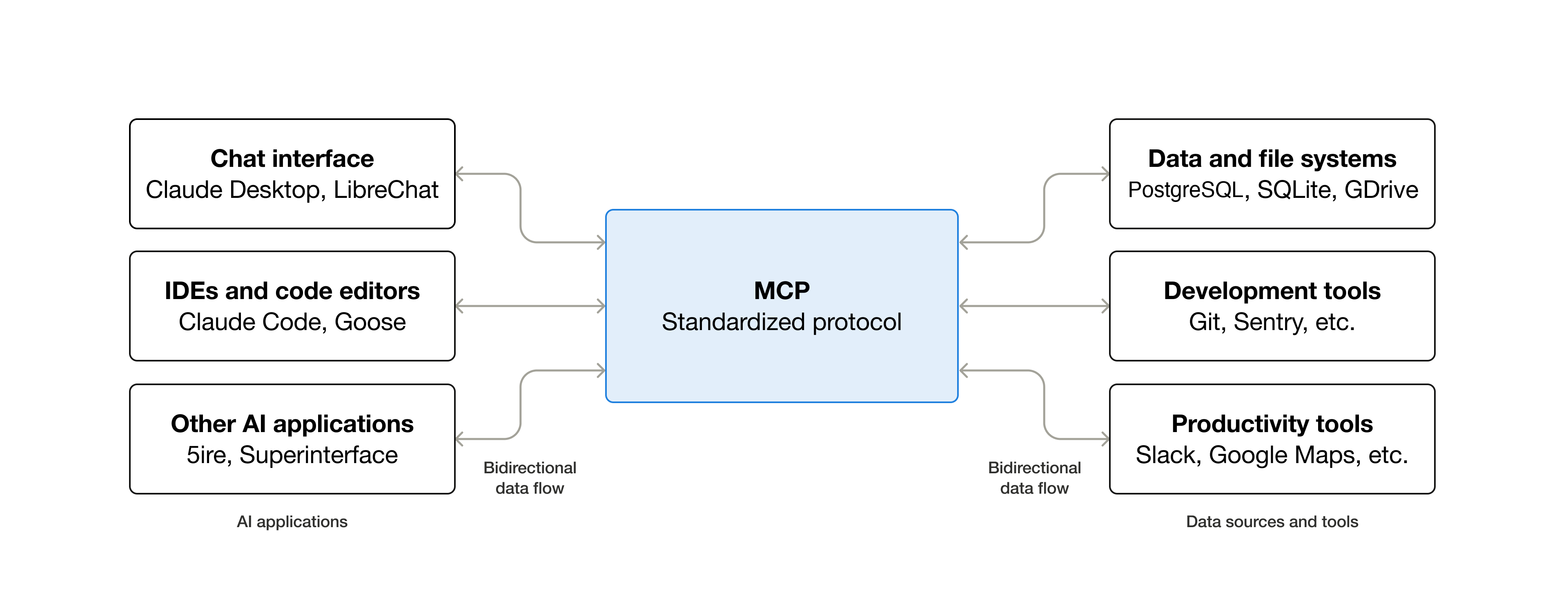
Simply put, MCP is an open standard or "universal language" that allows AI applications (like your chatbot or AI assistant in a code editor) to "talk" to external tools. Imagine you're visiting a foreign country where every power outlet has its own unique socket. You need a separate adapter for your phone, another for your laptop, and a third for your hairdryer. It's inconvenient, expensive, and inefficient.
Hi! I'm Era, a lawyer with 5 years of experience. Let me share how artificial intelligence transformed my practice and freed up time for truly important work.
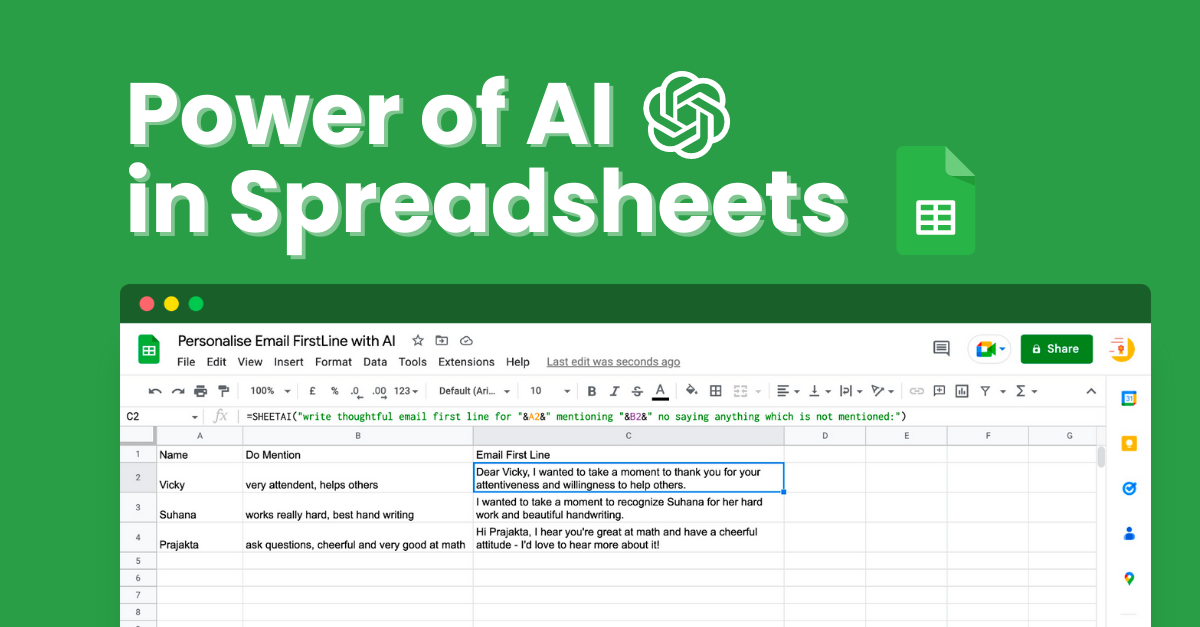
Hey! I'm John, and I've been digging into data analysis and process automation for several years now. I've tried everything—from good old Excel to Python scripts. But in 2025, AI turned everything upside down: tables now analyze data themselves, write formulas, and even solve tasks. I tested this on real cases—financial reports for small businesses, sales analysis in an online store. I'll tell you from a first-person perspective, simply and to the point, how it works. This isn't a dry review; it's practical advice so you can apply it right away. Why is AI a lifesaver for those drowning in data? Let's break it down.
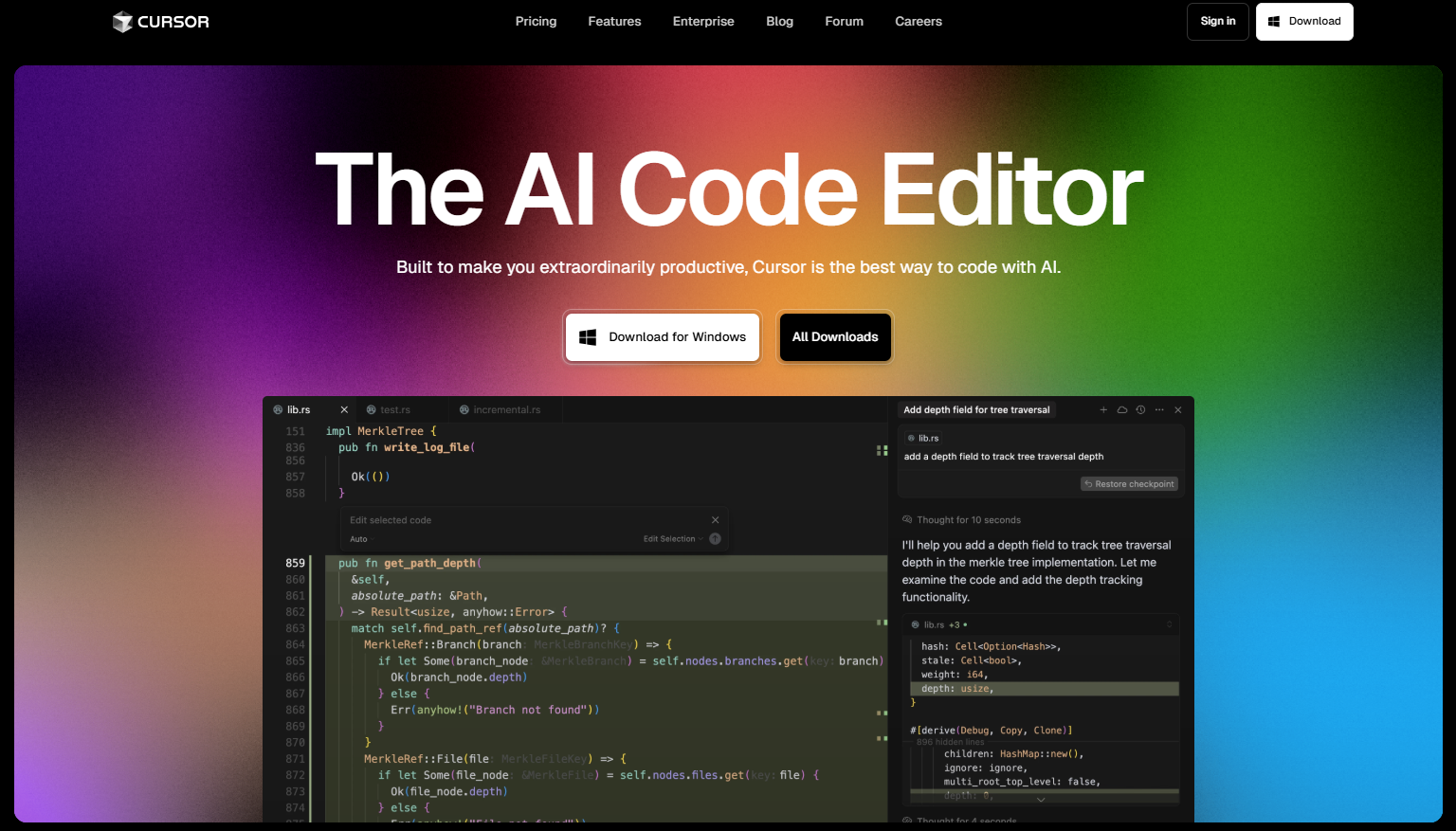
Hey friends! My name is John, and I've been working in software development for several years now. During this time, I've tried out a ton of tools—from classic IDEs like Visual Studio Code to experimental AI assistants like GitHub Copilot. But recently, Cursor 2.0 came out, and I couldn't pass it by. I installed it right after the release at the end of October 2025 and spent a whole week testing it on real projects: from simple Python scripts to complex web apps on React and Node.js. In this article, I'll tell you about Cursor 2.0 from a first-person perspective—detailed, with examples, pros, and cons. This isn't just a review; it's a full-fledged guide to help you decide if it's worth switching to this tool. Let's figure out why Cursor 2.0 is being called "the best AI code editor of 2025."
Artificial Intelligence (AI) is now a practical tool that enables businesses to optimize operations and drive innovation. In 2025, we see accelerated integration of AI across multiple industries — from document automation to advanced decision-making. Here are five key trends reshaping the business world: